New Launch or Subsale Condo: What Suits You Better?
Compare a KL new launch, completed developer unit and subsale condo by move-in timing, inspection, building history and buyer priorities.

Price usually gets the most attention when buyers compare a new launch with a subsale condo. But the more useful question is: how much do you need to see before you feel comfortable buying?
With a new launch, you are making a decision about a home that does not fully exist yet. With subsale, the unit and building are already there to inspect. A completed unit still owned by the developer falls somewhere in between.
None of these choices is automatically better or cheaper. They simply give you different amounts of information before you commit.
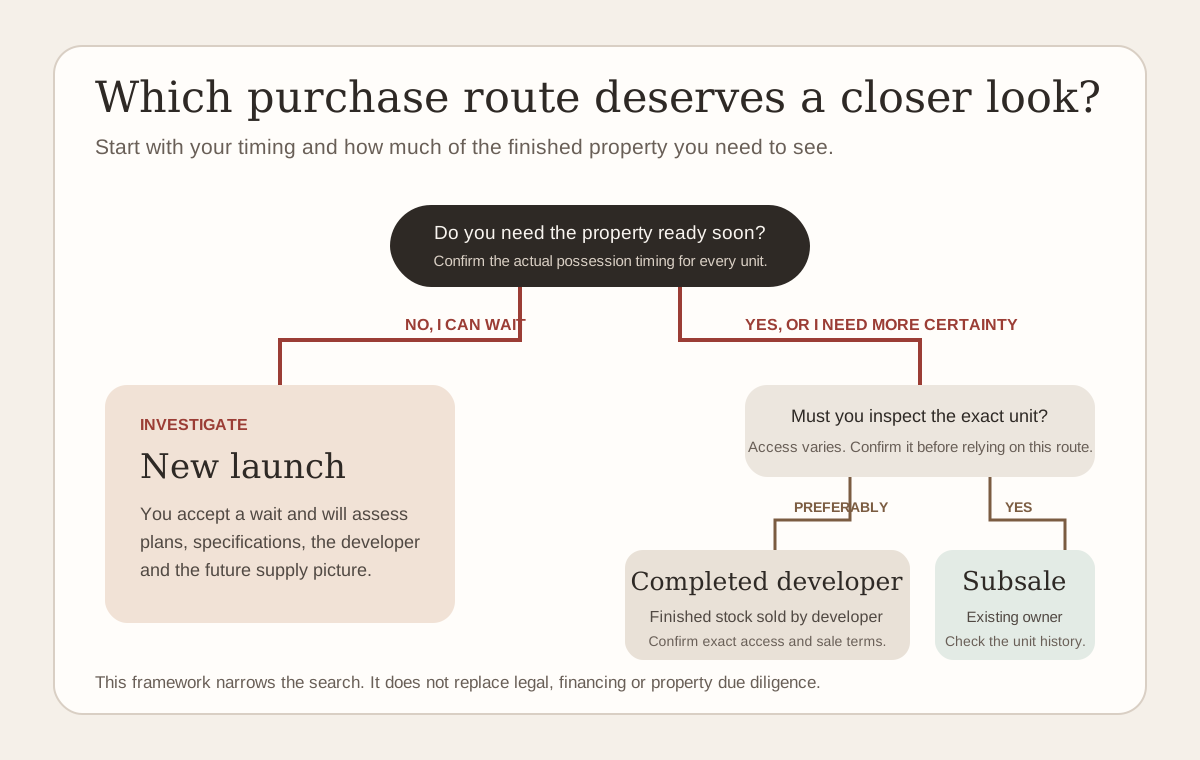
Start With What You Need to See
| Route | What you can judge before buying | Main uncertainty |
|---|---|---|
| New launch | Plans, specifications, developer and available show unit | The finished property and completion |
| Completed developer unit | Finished building and possibly the exact unit | Sale terms, delivery condition and access |
| Subsale | Actual unit, common areas and operating building | Unit history, ownership and transaction matters |
The table helps narrow the search. The actual property still needs its own price, condition, legal and financing checks.
A New Launch Asks You to Picture the Finished Home
If you are not in a hurry to move, a new launch can give you more choice earlier in the sales period. You may be able to compare more layouts or floors before the popular ones are taken.
The difficult part is that you are judging a future property. Plans and a show unit can tell you a lot, but they cannot fully reproduce the eventual view, traffic, noise or feel of the completed building.
That makes the developer and approved project information especially important. KPKT advises buyers to check the developer’s licence, advertising and sales permit, land status, expected completion date, unit information and price.
Our new-launch buying process guide covers what happens from signing to handover. At this stage, ask yourself whether you could live with the purchase if the finished property feels different from what you imagined.
Completed Developer Stock Gives You a Middle Option
Completed developer units are easy to overlook. The building is finished, but the unit is still being sold by the developer rather than an existing owner.
This can suit a buyer who wants more certainty about the finished property. Access varies, so ask whether you can inspect the exact unit rather than a different unit or show unit.
The sale terms still need attention. Get the delivery condition, included fittings, possession timing, defect arrangement and full cost breakdown in writing. Then compare the offer with recent transactions. A discount from an earlier list price does not necessarily make it good value.
Subsale Gives You More Evidence, Including the Flaws
With subsale, there is less need to imagine. You can stand inside the unit, check the light and view, listen for noise and see the condition for yourself.
The building has a history too. Its common areas, maintenance and recurring charges are easier to investigate, and there may be recent transactions or competing listings to compare.
Some of that evidence may be uncomfortable, but it is useful. Wear, poor renovation or weak maintenance can be seen before you buy. A conveyancing lawyer should separately check ownership, title, outstanding sums, consent requirements and possession terms.
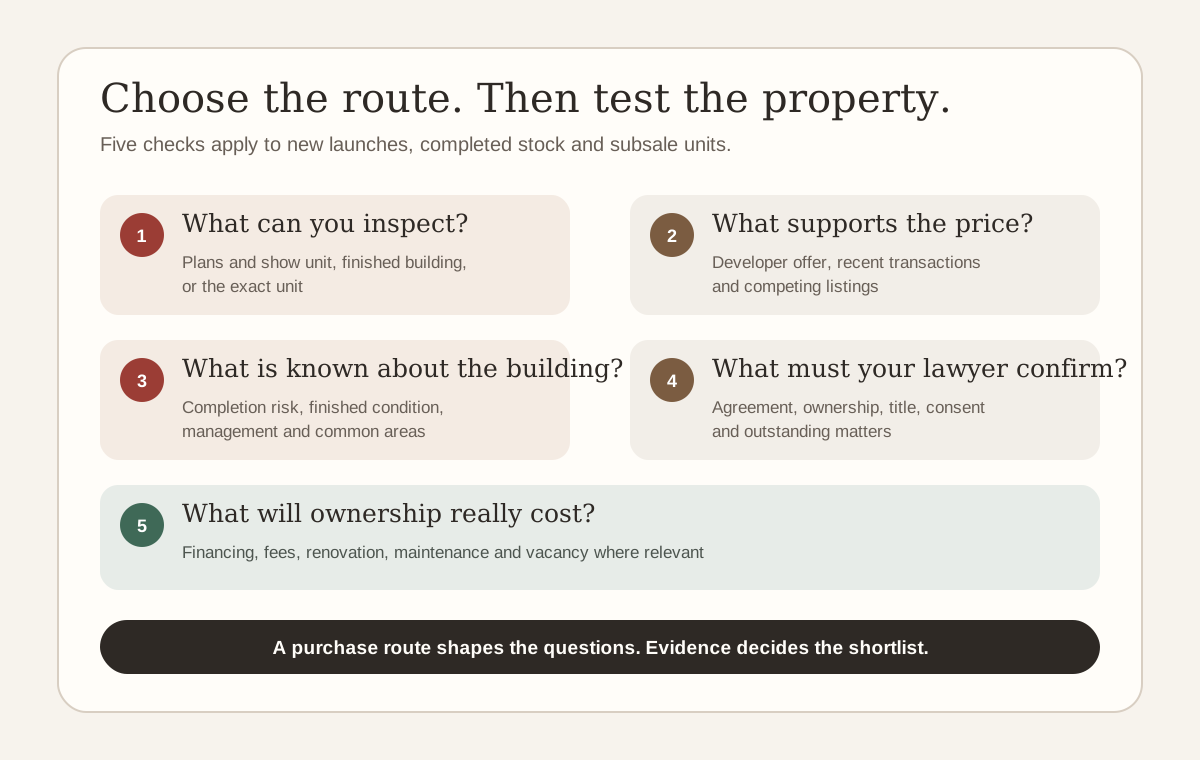
Five Questions Keep the Comparison Grounded
Whichever route you choose, ask five questions:
- What can I inspect?
- What supports the asking price?
- What is known about the building?
- What must my lawyer confirm?
- What will ownership really cost?
These questions matter more than whether the listing is labelled “new” or “subsale”. Financing should also be confirmed before one attractive unit starts to feel like the only acceptable choice.
A Simple Way to Decide Where to Start
If you can wait and are comfortable assessing a future property, start with new launches.
If you want a finished property but prefer to buy from a developer, ask about completed developer stock.
If you want to see the exact unit and understand how the building already operates, include subsale in your search.
After that, compare the properties rather than defending the category. A good subsale unit can be a better choice than a weak new launch, and a fairly priced completed developer unit may suit you better than either.
If you have a preferred KL area, budget, intended use and move-in date, send them to Edwiin with any projects already on your list. He can help you organise which inventory deserves closer comparison.
Common questions
Is a new launch always cheaper than a subsale condo?
No. Compare the actual price, package, condition, financing, renovation needs, recurring costs and recent transactions.
Can I inspect a completed developer unit before buying?
Possibly. Access varies, so ask whether you can inspect the exact unit and get its delivery condition in writing.
Does a subsale condo have a developer defect-liability period?
Do not assume the arrangement for a new developer sale applies to a subsale purchase. Ask a conveyancing lawyer to confirm the rights attached to the specific unit and agreement.
Which route is better for an overseas buyer?
There is no universal answer. A completed or subsale unit can reduce uncertainty about the finished property, while a new launch may suit a longer timeline. Remote viewing, legal representation, financing and management also matter.
Related guides
 Buyer Guide
Check the Building Before You Buy a Subsale KL Condo
Before buying a subsale KL condo, check the actual parcel's charges, building accounts, repair plans, house rules and outstanding sums.
 Buyer Guide
Can First-Time Buyers Really Get a 100% Home Loan in Malaysia?
The scheme most people mean when they say this (Skim Rumah Pertamaku) was discontinued in 2023. Here's what actually replaced it and who qualifies.
 Buyer Guide
What Rental Yield Can You Actually Expect From a KL Condo?
Real gross and net yield ranges for KLCC condos, and why the number on a developer's brochure is almost never the number you'll actually collect.